
Delete all DynamoDB items without deleting the table
Dynobase Truncate scans a DynamoDB table and deletes its items while keeping the table resource. It is not an atomic DynamoDB truncate operation, and reads and deletes consume capacity. Pause application writers if you need the table to remain empty.
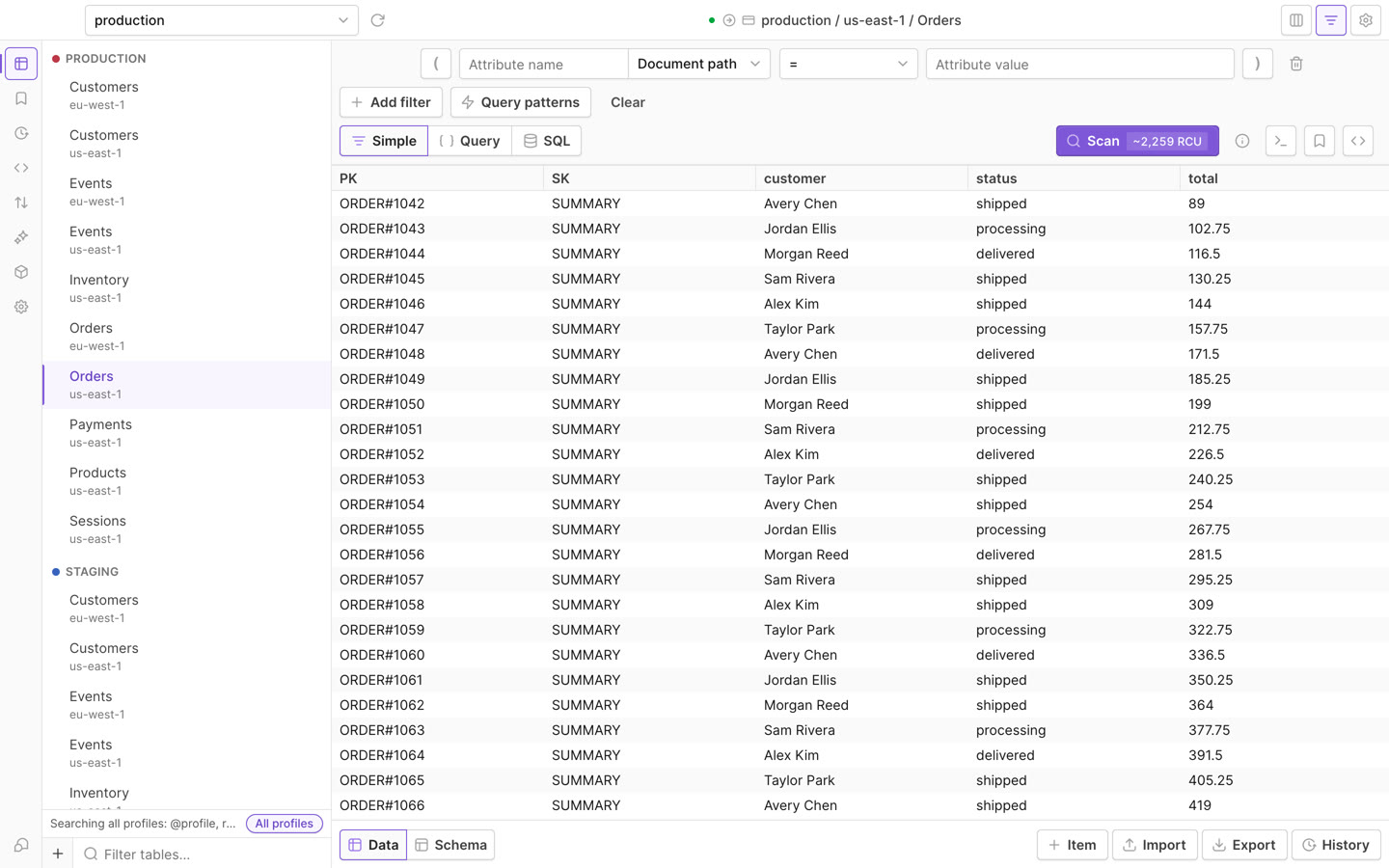
Right-click the intended table in the sidebar and choose Truncate. Verify its profile, Region, and name before continuing.
Type TRUNCATE in the confirmation field and start the operation. Review the warning: the job deletes items rather than dropping and recreating the table.
Wait for the process to finish and inspect errors. Run another scan to check for remaining items, especially if other applications were writing during the operation.
Frequently Asked Questions
How does truncation work?
What are the alternatives?
Why keep the table instead of recreating it?
How fast is truncation?
Is emptying a table free?
Use Truncate for deliberate scan-and-delete cleanup. Back up data you may need, pause competing writers, and verify completion before reusing the table.
Product Features
DynamoDB Tools
- SSH GUI Client
- Chat With Cloud
- MongoDB GUI Client
- AWS Cost Monitoring
- DynamoDB Query Builder
- DynamoDB Code Examples
- DynamoDB Node.js Queries
- DynamoDB JSON Converter
- DynamoDB UUID Generator
- DynamoDB Local Admin GUI
- DynamoDB Pricing Calculator
- DynamoDB Single-Table Design
- Best DynamoDB GUI Clients
- Dynobase vs DynoTable