
Delete a DynamoDB table with Dynobase
Prerequisite: Download Dynobase (free to try) in order to follow the steps below
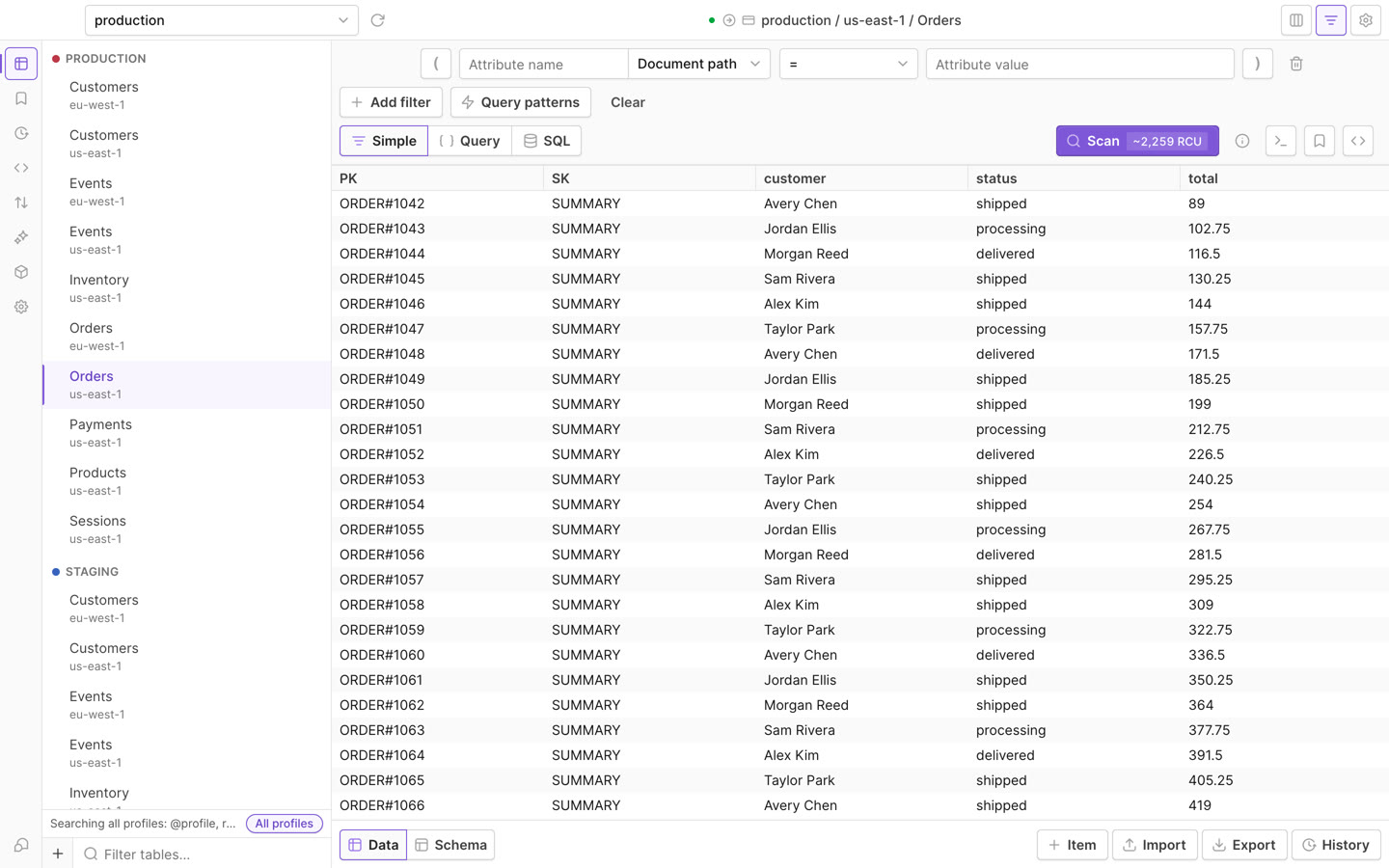
Dynobase deletes a DynamoDB table from its table context menu. Verify the profile, Region, and table name shown, then type DELETE to confirm. This removes the table resource and its items; use Truncate if you want to retain the table.
1
Check the target and backups
Find the table in the correct profile and Region. Review backups and dependent applications, and check whether deletion protection must be disabled.
2
Open Delete
Right-click the table and choose Delete. Read the table name in the confirmation dialog; do not rely only on the currently selected data tab.
3
Confirm and verify
Type DELETE, then choose Delete Table. Wait for completion and inspect any AWS error, including a deletion-protection rejection.
Frequently Asked Questions
Can I restore a table deleted by CloudFormation?
Restore from a retained on-demand backup, or from the system backup created on deletion when PITR was enabled. Restoration creates a new table; restore application configuration and infrastructure references separately. See backup management.
Can I delete all tables in one request?
There is no single DeleteTable request for every table. Enumerate and review the intended tables, then delete them individually with appropriate permissions; a script must handle pagination, protection, failures, and dependent resources.
What if deletion protection is enabled?
AWS rejects DeleteTable while deletion protection is enabled. Deliberately disable the setting through an authorized administration workflow before trying again; the confirmation dialog does not override it.
Product Features
DynamoDB Tools
- SSH GUI Client
- Chat With Cloud
- MongoDB GUI Client
- AWS Cost Monitoring
- DynamoDB Query Builder
- DynamoDB Code Examples
- DynamoDB Node.js Queries
- DynamoDB JSON Converter
- DynamoDB UUID Generator
- DynamoDB Local Admin GUI
- DynamoDB Pricing Calculator
- DynamoDB Single-Table Design
- Best DynamoDB GUI Clients
- Dynobase vs DynoTable
DynamoDB Info
© 2026 Dynobase